
 English
  Spanish
  French


Why Supply Chains Need New Skills?

Introduction to Supply Chain Sustainability Supply chains are changing fast. What once focused on cost and speed now demands resilience, transparency, and sustainability. Today, disruptions come from multiple directions. Extreme weather delays shipments, while infrastructure bottlenecks slow logistics. As a result, supply chains face constant pressure. For example, floods and heatwaves have already disrupted transport […]
Is the Energy Transition Reshaping U.S. Careers?

Why the U.S. Energy Transition Matters Now The U.S. energy transition is no longer a future scenario—it is actively reshaping the economy, capital flows, and labor markets in real time. Policy has been a major catalyst. The Inflation Reduction Act (IRA) represents the largest climate investment in U.S. history, directing approximately $369 billion toward clean […]
Climate Policy Uncertainty and U.S. Investment

Climate policy uncertainty in the United States is no longer a background issue. It directly shapes how companies invest, plan, and compete. Regulations shift between federal and state levels. Political cycles influence priorities. At the same time, climate risks continue to intensify. As a result, businesses must make long-term investment decisions without clear policy direction. […]
U.S. Climate Crisis Drives Business Action

The climate crisis in the United States is no longer a future concern. It is already reshaping how companies operate, invest, and compete. From supply chain disruptions to rising insurance costs, climate-related risks are becoming core business challenges. As a result, companies are moving faster on sustainability, not because of pressure alone, but because it […]
Climate Risk and Resilience as Business Priorities in the USA

Climate risk is no longer treated as a distant environmental concern. Across the United States, physical climate risks such as extreme heat, flooding, wildfires, and storms are now directly affecting business continuity, asset performance, and supply chains. Additionally, companies are increasingly embedding climate risk into enterprise risk management frameworks as operational disruptions and insurance pressures […]
Why ESG Skills Matter in Shipping Finance

The shipping industry is undergoing a major transformation. As banks adopt stricter climate alignment rules and international regulators enforce emissions targets, Environmental, Social, and Governance (ESG) performance has become a core part of shipping finance. It’s no longer enough to understand vessel values or market cycles. Today’s finance professionals must also evaluate climate risks, regulatory […]
Why ESG Reporting Matters for Shipping Companies

Shipping companies face rising pressure from lenders, investors, and regulators to prove they can manage climate risk and compliance exposure. ESG reporting has become the tool that turns sustainability performance into financing credibility. According to the International Maritime Organization (IMO), international shipping accounts for nearly 3% of global GHG emissions, making emissions tracking critical to […]
Key Sustainability Trends Shaping Canadian Business in 2026

As Canada heads into 2026, ESG is becoming a decisive factor in how companies compete, invest, and build trust in the market. Indeed, sustainability is no longer framed as a voluntary commitment or reputational add-on. Specifically, it is increasingly influencing access to capital, regulatory exposure, and long-term business resilience. With tighter scrutiny of climate and […]
Sustainability & ESG Without the Label: Nine Key Trends Shaping US Business in 2026

Despite political headwinds, Sustainability remains deeply embedded in the U.S. economy. Trillions of dollars are still managed under sustainable investment strategies. State-level climate regulations are expanding, and companies are accelerating efforts around climate risk, supply chain transparency, and data-driven reporting. While political debates swirl around the term “ESG,” the reality inside boardrooms, investment committees, and […]
Europe’s 2040 Climate Pathway: COP30 Implications for ESG Leaders
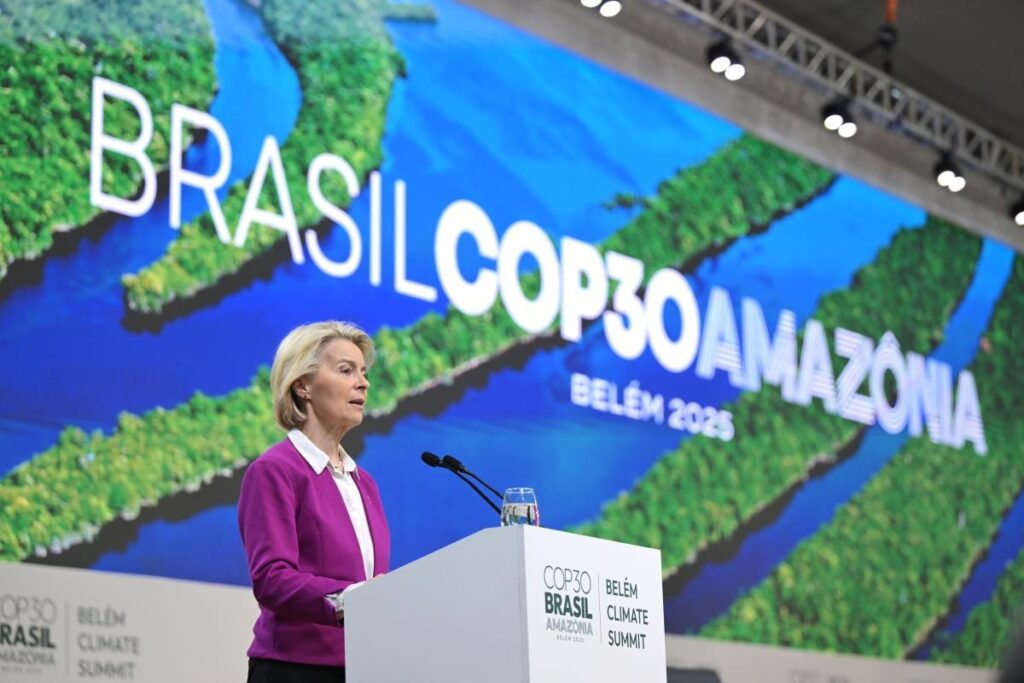
In the week leading up to COP30 in Belém, Brazil, Europe sent a mixed and rather uncomfortable message to the world. On paper, the EU reaffirms its commitment to climate neutrality by 2050. In practice, it has now agreed to a 90% reduction in greenhouse gas emissions by 2040, compared with 1990 levels, surrounded […]