
 English
  Spanish
  French


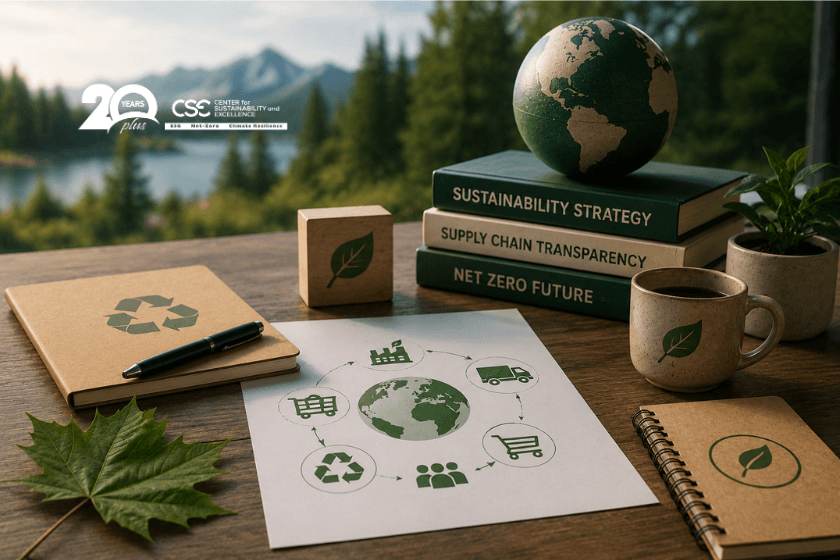


Scope 3 emissions are Canada’s hidden business risk
Scope 3 emissions in Canada are becoming one of the most urgent supply chain challenges for companies that want credible sustainability and net zero strategies. Measuring emissions from owned operations or purchased electricity is no longer enough. The bigger challenge often sits outside direct control, across suppliers, logistics, raw materials, purchased goods, product use, and end-of-life impacts.
That challenge is Scope 3 emissions.
For many organisations, Scope 3 emissions represent the largest and most complex part of their carbon footprint. They are also the hardest to measure, verify, and reduce. This makes Scope 3 one of Canada’s most important supply chain blind spots.
The issue is especially urgent for sectors such as food and beverage, manufacturing, forestry, retail, real estate, logistics, mining, and financial services. These industries depend on large supplier networks, complex materials, transport systems, and downstream customer impacts.
As a result, climate risk is not limited to a company’s own facilities. It travels through the supply chain.
Why Scope 3 is difficult to manage
Scope 1 emissions come from sources a company owns or controls, scope 2 emissions come from purchased electricity, heating, or cooling, scope 3 emissions come from indirect activities across the wider value chain.
The GHG Protocol identifies 15 Scope 3 categories. These include purchased goods and services, capital goods, fuel and energy-related activities, transportation, waste, business travel, employee commuting, leased assets, use of sold products, end-of-life treatment, franchises, and investments.
In practice, companies do not need to perfect all 15 categories at once. A stronger first step is to identify which categories matter most. For a food company, purchased ingredients and packaging may create major emissions whereas for a real estate company, construction materials and tenant energy use may dominate. Lastly, for a financial institution, financed emissions may represent the biggest challenge.
This is where many companies get stuck. Supplier data may be incomplete. Internal teams may use different systems. Procurement may focus on cost and availability, while sustainability teams focus on impact. Finance may need audit-ready data, while suppliers may only provide estimates.
Therefore, Scope 3 is not only a carbon accounting issue. It is a management issue.
Supply chain transparency now includes climate and human rights
In Canada, supply chain sustainability also connects to human rights and compliance. Bill S-211, the Fighting Against Forced Labour and Child Labour in Supply Chains Act, requires many organisations to report on the steps they take to prevent and reduce forced labour and child labour risks in their supply chains.
This has changed the conversation. Companies must understand where their goods come from, how suppliers operate, and what risks exist beyond their direct control.
The same logic applies to Scope 3 emissions. Weak supplier visibility can hide climate risks, labour risks, and reputational risks. It can also weaken ESG reporting and expose companies to accusations of greenwashing.
The lesson is clear: supply chain transparency cannot sit in separate boxes. Climate, human rights, procurement, reporting, and business strategy now overlap.
Net zero claims need Scope 3 credibility
Many Canadian companies have announced net zero goals. However, a net zero target that ignores Scope 3 can quickly lose credibility.
Investors, clients, and business partners increasingly expect companies to explain how they plan to reduce value chain emissions. This matters even when regulation moves slowly. Canadian companies that operate globally or sell to large corporate clients may face sustainability expectations from international markets.
The Science Based Targets initiative recognizes Scope 3 as one of the most significant and challenging emissions areas for businesses. This is because value chain emissions often sit outside direct operational control. Yet they still shape the company’s real climate impact.
To move forward, companies need a practical roadmap. This may include:
- Screening all Scope 3 categories
- Prioritising material emissions hotspots
- Moving from spend-based estimates to supplier-specific data where possible
- Engaging high-impact suppliers
- Integrating emissions criteria into procurement
- Setting science-based targets
- Tracking progress through credible reporting
- Communicating results without exaggeration
This work takes time. However, delaying it creates bigger risks later.
Scope 3 is also a skills gap
Scope 3 creates a major skills gap for Canadian organisations. Professionals need more than awareness. They need the ability to connect data, regulation, procurement, reporting, and strategy.
A sustainability professional working on Scope 3 must know how to ask suppliers for data, assess quality, identify hotspots, work with finance teams, support reporting, and communicate progress clearly. They must also understand when data is estimated, when it is supplier-specific, and when it is strong enough for external assurance.
This is especially important as Canada advances sustainability disclosure through CSDS 1 and CSDS 2. These standards increase the need for reliable sustainability-related and climate-related information. Even when mandatory timelines shift, the market continues to move toward stronger disclosure expectations.
Canadian businesses need professionals who can translate sustainability frameworks into practical action.
Canada cannot afford to ignore Scope 3
Scope 3 may be difficult, but it is also where sustainability becomes real.
It reveals whether a company understands its suppliers, tests whether net zero targets are credible, shows whether procurement supports climate strategy, and exposes whether ESG reporting reflects actual business impact.
Canadian companies that address Scope 3 early can build stronger supply chains, reduce future reporting pressure, improve supplier relationships, and strengthen market trust.
Those that delay may face incomplete data, weak climate plans, compliance gaps, and reputational risk.
The next generation of sustainability leadership in Canada will belong to professionals who can connect climate action, supply chain transparency, and business strategy.
FAQs
What are Scope 3 emissions?
Scope 3 emissions are indirect emissions that occur across a company’s value chain. They include supplier emissions, transportation, business travel, product use, waste, investments, and other upstream or downstream impacts.
Why are Scope 3 emissions important in Canada?
Scope 3 emissions matter because they often represent the largest part of a company’s carbon footprint. They also connect to supply chain transparency, ESG reporting, net zero targets, and stakeholder expectations.
How does Bill S-211 connect to Scope 3?
Bill S-211 focuses on forced labour and child labour risks in supply chains. While it does not regulate carbon emissions directly, it reinforces the need for companies to understand supplier practices and value chain risks.
What skills do Canadian sustainability professionals need for Scope 3?
They need knowledge of GHG Protocol, supplier engagement, carbon accounting, materiality, ESG reporting, net zero strategy, external assurance, and responsible communication.
How can companies start managing Scope 3?
They can begin by screening all Scope 3 categories, identifying material hotspots, improving supplier data, engaging key suppliers, setting reduction priorities, and integrating Scope 3 into reporting and strategy.
Build Scope 3 expertise with CSE
To build the skills needed to manage Scope 3 emissions, supply chain transparency, and credible net zero strategy, explore the Certified Sustainability Practitioner Program – Advanced Edition, Canada Cohort 2.
The October 2026 training agenda includes carbon management, Scope 3, supply chain sustainability, Bill S-211, materiality, reporting standards, external assurance, net zero, and responsible sustainability communication.
This program helps Canadian professionals connect climate action, compliance, supply chain risk, and business strategy in a practical way.