 English
  Spanish
  French




AI Is Reshaping U.S. Climate Reporting Careers
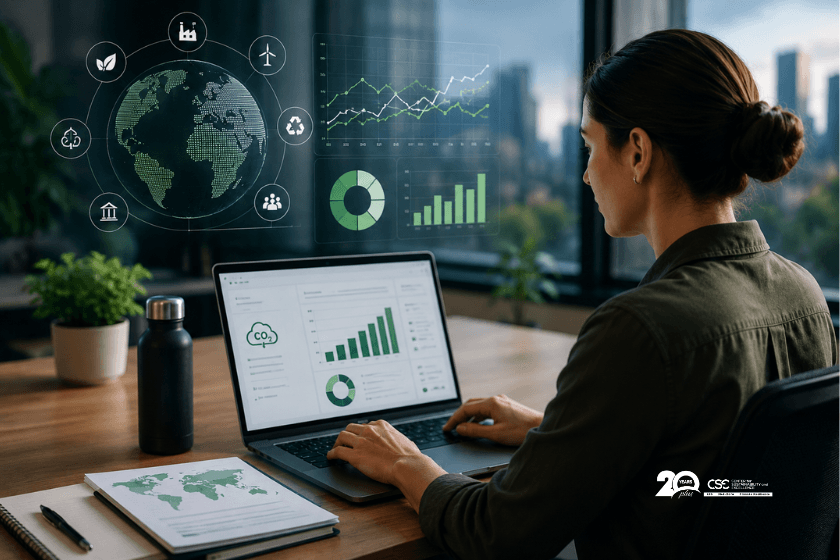
AI climate reporting jobs USA are evolving rapidly as companies rethink how they manage carbon data, climate risk, and sustainability reporting.
Just a few years ago, many sustainability professionals focused mainly on annual reports, spreadsheets, and disclosure coordination. Today, companies increasingly use artificial intelligence to automate emissions tracking, supplier analysis, climate forecasting, and reporting workflows.
This shift is transforming sustainability careers across the United States.
AI can now process thousands of supplier records in minutes, identify emissions anomalies, and support reporting automation. However, companies still need professionals who can interpret risks, guide strategy, communicate with leadership, and make business decisions based on the data.
That is why strategic sustainability expertise is becoming more valuable, not less.
Companies Are Investing in AI-Powered Reporting
Large U.S. companies face growing pressure to improve climate data accuracy and supply chain transparency. California’s climate disclosure laws, investor scrutiny, customer expectations, and insurance risks continue to push organizations toward stronger reporting systems.
As a result, businesses increasingly invest in AI-supported sustainability tools.
According to the World Economic Forum, AI can significantly improve sustainability reporting efficiency by reducing manual work and helping companies process complex operational data faster.
Meanwhile, McKinsey’s State of AI report found that organizations across industries continue expanding AI adoption, particularly in data-intensive business functions.
Climate reporting fits directly into that trend.
Several sustainability software platforms already use AI-assisted capabilities to support carbon management and reporting workflows. Companies such as Workiva, Persefoni, Watershed, and Salesforce Sustainability Cloud increasingly integrate automation and predictive analytics into emissions management systems.
These tools help organizations collect and organize data faster. However, technology alone does not solve the bigger challenge.
Companies still need professionals who understand sustainability strategy, carbon accounting, climate risk, and operational decision-making.
Reporting-Only Roles Are Changing
Traditional reporting roles are evolving because AI can now automate parts of repetitive administrative work.
For example, AI systems can:
- Organize emissions datasets
- Flag inconsistent supplier information
- Generate reporting summaries
- Detect missing climate data
- Compare reporting periods
- Support carbon forecasting
This changes the nature of sustainability work.
Professionals who only focus on manual reporting processes may face increasing pressure. However, professionals who can interpret data strategically may become far more valuable.
In practice, sustainability professionals now need to combine:
- Carbon reporting knowledge
- Climate disclosure expertise
- Business understanding
- Data literacy
- Supply chain awareness
- Risk assessment capabilities
- Communication skills
The role is moving away from compliance-only work and toward strategic business integration.
The U.S. Sustainability Skills Gap Is Growing
The demand for sustainability professionals continues to grow, especially in roles connected to climate reporting and carbon management.
According to the Trellis State of the Sustainability Profession 2026 report, sustainability teams increasingly influence operational strategy, procurement decisions, and long-term business planning inside major organizations.
At the same time, many employers struggle to find professionals with both sustainability expertise and digital capabilities.
This skills gap is becoming more visible because climate reporting requirements continue expanding. California SB 253 climate disclosure rules, for example, require large companies doing business in California to disclose greenhouse gas emissions, including Scope 3 emissions over time.
That creates a major operational challenge.
Scope 3 emissions often represent more than 70% of a company’s carbon footprint according to the GHG Protocol. Tracking supplier emissions across global operations requires better data systems, stronger collaboration, and professionals capable of managing complex reporting processes.
AI can help organize the information. However, companies still need experienced professionals who understand what the numbers actually mean.
AI Cannot Replace Strategic Judgment
Some professionals worry that AI will eliminate sustainability jobs entirely. Current market trends suggest something different.
AI may reduce repetitive reporting work, but strategic sustainability expertise remains difficult to automate.
For example, AI can identify suppliers with rising emissions or operational inefficiencies. Yet professionals must still decide:
- Which suppliers create material risk
- How procurement teams should respond
- Whether climate risks affect operations
- Which carbon reduction strategies make financial sense
- How reporting decisions affect reputation and investors
These decisions require business judgment, industry knowledge, and leadership skills.
In other words, AI supports sustainability professionals. It does not replace strategic thinking.
Why Professionals Must Adapt Quickly
The U.S. sustainability market continues changing rapidly. Companies increasingly expect professionals to understand climate reporting, carbon management, and digital transformation together.
This creates both pressure and opportunity.
Professionals who adapt early may move into stronger leadership roles because businesses need experts who can connect sustainability data with operational and financial decision-making.
Those who rely only on traditional reporting skills may struggle as automation expands.
The market increasingly rewards professionals who can:
- Translate climate data into business strategy
- Understand carbon reduction planning
- Work with AI-supported reporting systems
- Interpret supplier risks
- Support executive decision-making
This is becoming a competitive advantage across industries including manufacturing, finance, retail, logistics, energy, and technology.
Preparing for the Next Generation of Sustainability Careers
The Certified Sustainability Practitioner Program – Advanced Edition helps professionals build practical sustainability and climate reporting expertise needed in the evolving U.S. market.
The program focuses on real-world skills including:
- Climate reporting
- Carbon management
- Materiality assessment
- Supply chain sustainability
- Sustainability strategy
- Climate risk
- Business integration
- Regulatory developments
Most importantly, the program prepares professionals to move beyond reporting-only responsibilities and contribute strategically inside organizations.
As AI continues reshaping sustainability operations, professionals who combine climate expertise with business understanding and digital awareness may become some of the most valuable talent in the market.
The Future of Sustainability Careers Is Strategic
AI is transforming climate reporting jobs in the USA. However, the future does not belong solely to technology.
It belongs to professionals who can interpret data, guide business decisions, communicate risks, and connect sustainability with long-term value creation.
AI can process information quickly. Strategic sustainability professionals turn that information into action.
That distinction may define the next generation of climate and sustainability leadership in the United States.