

 English
  Spanish
  French


California SB-253 Is Setting the Pace

Why SB-253 Matters Now California SB-253 introduces mandatory greenhouse gas emissions disclosure for large companies starting in 2026. Companies must report Scope 1 and Scope 2 emissions first, followed by Scope 3. This marks a structural shift. Until now, most U.S. companies approached sustainability reporting as voluntary or investor-driven. SB-253 turns it into a legal […]
CSE Executive Sustainability Programme Gains Momentum as ESG Goes Strategic

Strong demand across Europe and the UK reflects a shift from ESG compliance to strategic sustainability and long-term value creation. BRUSSELS, April 15, 2026 Leveraging more than two decades of experience, CSE continues to advance its commitment to shaping the next generation of sustainability leaders. The Center for Sustainability and Excellence (CSE) continues to lead at […]
U.S. Climate Crisis Drives Business Action

The climate crisis in the United States is no longer a future concern. It is already reshaping how companies operate, invest, and compete. From supply chain disruptions to rising insurance costs, climate-related risks are becoming core business challenges. As a result, companies are moving faster on sustainability, not because of pressure alone, but because it […]
Net Zero Commitments in U.S. Corporations

Net zero commitments in U.S. corporations have entered a new phase. Companies are no longer judged by their targets. They are judged by execution. Across industries, organizations have announced ambitious climate goals. Yet, many struggle to translate these commitments into measurable progress. Companies are advancing on emissions reductions, but only a small percentage are fully […]
Introduction to UK ESG Regulation
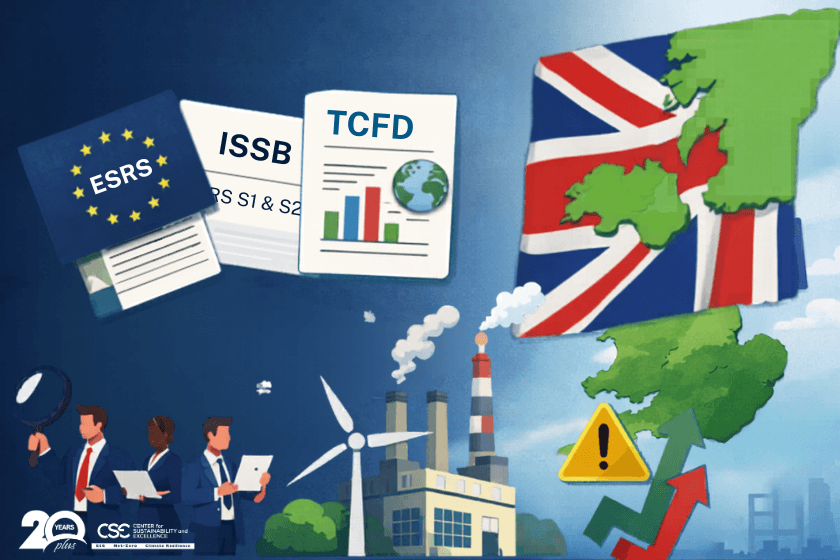
Introduction to UK ESG Regulation UK ESG regulation is entering a decisive phase in 2026. Sustainability reporting is no longer optional or purely reputational , it is becoming a regulated, standardized, and investor-critical requirement. The UK government, Financial Conduct Authority (FCA), and Financial Reporting Council (FRC) are aligning national rules with global frameworks such as: […]
How U.S. Firms Use Sustainability Strategically

Moving Beyond Compliance Sustainability in the U.S. has entered a new phase. It is no longer driven only by compliance. Instead, it shapes how companies compete, innovate, and grow. Regulatory pressure still plays a role. For example, California’s climate disclosure requirements are pushing companies to improve transparency. However, leading firms do not stop there. They […]
Circular Economy Transformation in U.S. Business

The circular economy is moving from theory to reality in the United States. Companies are no longer experimenting. They are redesigning operations, supply chains, and products to reduce waste and improve efficiency. This shift is driven by rising costs, regulatory pressure, and changing customer expectations. At the same time, it is creating a clear demand […]
UK Sustainability Reporting: Why It Matters for ESG Leaders

Sustainability reporting in the UK is entering a new phase of strategic importance. With the Financial Conduct Authority (FCA) advancing new disclosure requirements under the Sustainability Disclosure Requirements (SDR) framework, and the expected rollout of UK Sustainability Reporting Standards (UK SRS 1 and SRS 2) aligned with IFRS Sustainability Disclosure Standards (IFRS S1 and S2), […]
Greenwashing Laws Transform ESG Communication

Sustainability claims are under increasing scrutiny. As companies expand their ESG strategies and public commitments, regulators are responding with stricter rules to prevent misleading environmental messaging. In Canada, recent changes to the Competition Act mark a significant step in strengthening greenwashing regulation. For organizations, this shift means that sustainability communication is no longer just a […]
How AI Is Transforming Sustainability Strategy

Introduction to AI in Sustainability Strategy AI in sustainability strategy is moving from pilot phase to core infrastructure for US corporations. Companies now process vast volumes of emissions data, supplier disclosures, climate scenarios, and regulatory filings. Manual systems struggle to meet expectations under frameworks such as ISSB, TCFD, the GHG Protocol, and emerging SEC climate […]