 English
  Spanish
  French


CSE Highlights Product Circularity at the 3rd Annual World ESG & Climate Summit 2026
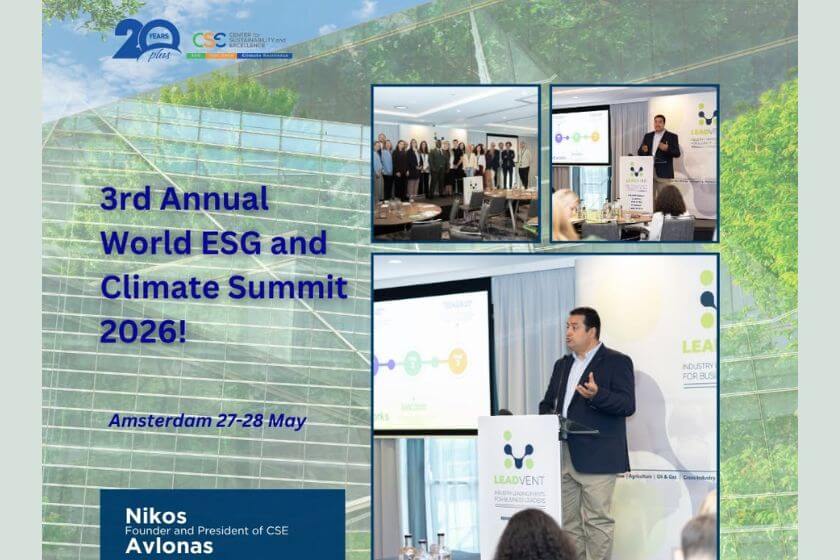
Amsterdam, May 2026 – The Center for Sustainability and Excellence (CSE) participated in the 3rd Annual World ESG & Climate Summit 2026, held in Amsterdam on May 27–28, 2026. CSE was represented by its President, Nikos Avlonas, who delivered a presentation titled “Product Circularity as a Strategic Advantage: Ratings and Assurance.” The summit brought together […]
CSE Sustainability Certification Recognized by Trellis

CSE Certification Recognized by Trellis Recognition matters when it reflects trust, practical value, and long-standing contribution. That is why CSE is honored that its Certified Sustainability Practitioner Program has been included in Trellis’ 2026 list of sustainability certifications. For CSE, this recognition is more than a mention. It confirms the growing importance of credible […]
Sustainability Training ROI: Budget or Advantage?

Sustainability training ROI has become a real business question for U.S. companies. Training budgets face pressure. Managers want proof. HR teams need a clear reason to approve participation. Yet sustainability now affects risk, reporting, supply chains, client expectations, reputation, and long-term planning. So, the question is not only, “Can we afford this training?” A better […]
Circularity Assessment for Retailers: From Goals to Product Proof
Why Sustainability Claims Need Stronger Proof Private-label products are no longer just lower-cost alternatives. For many retailers, they are strategic brands that influence margin, customer loyalty, product innovation, and sustainability positioning. This is where a circularity assessment can change the game. Customers now compare more than price. They look at product quality, packaging, durability, recycled […]
Greenwashing in Canada Just Became a Legal Risk
Greenwashing in Canada is no longer just a reputational concern. It has become a legal, compliance, investor, and business risk for companies that communicate environmental claims without strong evidence. For years, companies used broad sustainability language to describe climate goals, product benefits, net zero plans, responsible sourcing, and corporate environmental performance. Terms such as “green,” […]
Product Circularity in Sustainability Strategy
Product Circularity: Missing Link in Sustainability Strategy Product circularity is becoming one of the most important parts of sustainability strategy. Yet many companies still treat it as a technical issue, a recycling target, or a waste management project. That view is too narrow. Product circularity starts much earlier. It begins with design. It asks how […]
AI Sustainability Compliance for USA Leaders

AI sustainability compliance is changing how U.S. companies manage reporting, climate data, governance, and risk. Many teams now use AI to review documents, organize supplier data, compare disclosures, and prepare first drafts. However, AI cannot replace the professional judgment that credible compliance requires. AI sustainability compliance also raises a practical question for sustainability leaders. Will […]
Circular Economy in Action: Strategy, ESG Value & Business Benefits
Why Circular Economy in Action Matters Now Circular economy in action is becoming a core business strategy, not a side sustainability initiative. Companies face rising material costs, supply chain disruption, climate pressure, stricter product rules, and growing expectations from customers and investors. As a result, many organizations now need practical ways to reduce waste, keep […]
While the SEC Retreats, States Are Pushing Climate Disclosure Forward
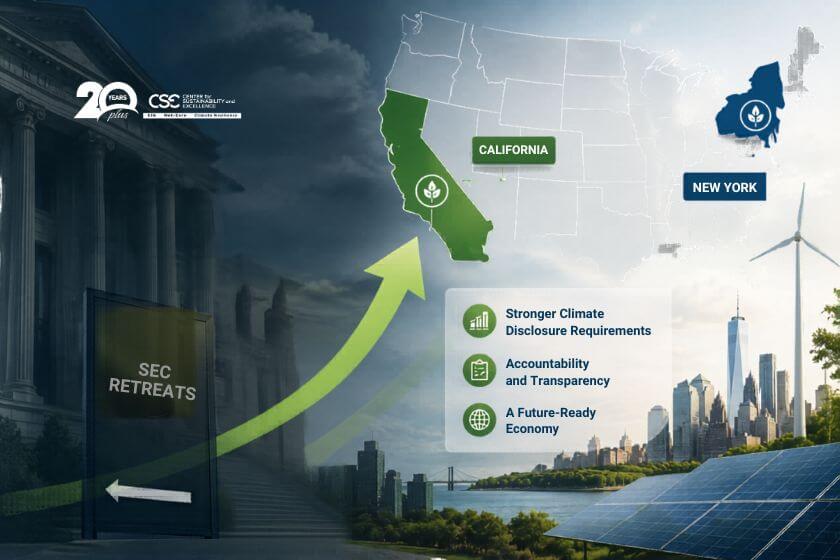
Why State Climate Disclosure Matters Now State climate disclosure is becoming one of the most important compliance issues for U.S. companies. For several years, businesses watched the U.S. Securities and Exchange Commission’s climate disclosure rule as the main federal development. Now, the federal picture is uncertain. The SEC has moved away from the climate-related disclosure […]
Circular Economy in Action: Why Product Circularity Matters Now
The circular economy has moved from an emerging sustainability concept to a business priority. Organizations now face growing pressure to reduce waste, improve resource efficiency, strengthen supply chains, and create long-term value. At the same time, regulators, investors, customers, and employees expect companies to show measurable progress on sustainability, ESG, and responsible business transformation. Recent […]