 English
  Spanish
  French




Why Supply Chain Sustainability Matters in 2026
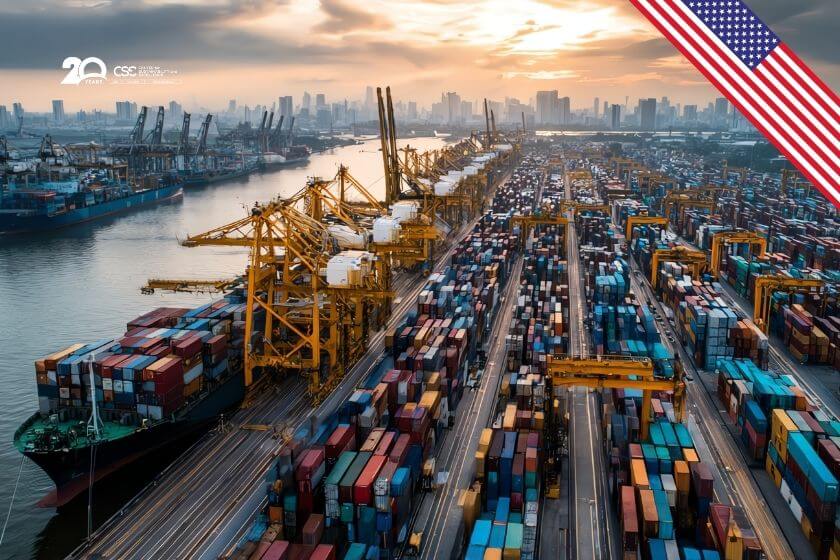
U.S. supply chains face growing pressure in 2026. Climate risks, regulatory scrutiny, and investor expectations now shape sourcing and operations. Sustainability has shifted from a compliance task to a strategic priority that supports resilience, cost control, and long-term value. According to IntegrityNext’s analysis of global supply chain trends, sustainability, transparency, and digital traceability rank among the top five priorities shaping supply chains through 2026 and beyond.
At the same time, The Supply Edge highlights that U.S. companies increasingly link sustainability with agility and risk management, especially across multi-tier supplier networks. Together, these trends confirm one reality. Sustainable supply chains now define competitive advantage.
Benefits of Sustainable Supply Chains
Embedding sustainability across supply chains delivers measurable benefits:
-
Lower exposure to climate and regulatory risks
-
Reduced operational costs through resource efficiency
-
Stronger supplier relationships and continuity
-
Improved ESG ratings and investor confidence
-
Greater alignment with Net Zero commitments
For U.S. firms operating globally, sustainability also supports compliance with international customer and partner expectations, including EU due diligence and reporting requirements.
Embedding Sustainability Through Circular Economy Frameworks
Why Circular Economy Matters
Circular economy models help U.S. companies move away from linear take-make-dispose systems. Instead, they design supply chains that eliminate waste, extend product life, and regenerate natural systems.
A Forbes Council analysis explains that circular supply chains improve U.S. supply chain resilience by reducing dependence on virgin materials and volatile commodity markets.
Practical Circular Economy Actions
To operationalize circularity, companies should:
-
Redesign products for reuse, repair, and recycling
-
Establish reverse logistics and take-back programs
-
Work with suppliers on material substitution
-
Track material flows and recovery rates
These actions directly support emissions reduction, since material extraction and processing account for a major share of supply chain carbon emissions.
Using UN Practical Guidance for Supply Chains
United Nations frameworks provide practical structure for embedding sustainability. The UN Global Compact and related supply chain guides recommend:
-
Supplier risk mapping across environmental and social criteria
-
Clear supplier codes of conduct
-
Continuous supplier engagement and capacity building
-
Performance monitoring with KPIs
EY’s guidance on responsible and resilient supply chains shows that companies applying UN-aligned frameworks improve supplier compliance while strengthening governance and transparency
Carbon Management and Scope 3 Emissions (Module 6 Focus)
For most U.S. companies, Scope 3 emissions represent more than 70 percent of total emissions. These include purchased goods, logistics, and product use.
Effective carbon management requires:
-
Full Scope 3 emissions mapping
-
Supplier data collection and validation
-
Science-based target setting
-
Integration of carbon data into procurement decisions
Digital tools now play a key role. Advanced analytics, supplier platforms, and lifecycle assessment software allow companies to track emissions and identify reduction opportunities at scale.
Real-World Case Studies
Apple: Circular Materials and Supplier Engagement
Apple provides a strong U.S. example of circular supply chain integration. According to its Environmental Progress Report, Apple now uses over 20 percent recycled materials across products, including aluminum, cobalt, and rare earth elements. The company works directly with suppliers to improve energy efficiency and transition to renewable energy, helping reduce supply chain emissions year over year. Challenges included supplier readiness and data consistency. Apple addressed these through long-term supplier partnerships, technical support, and clear sustainability scorecards.
Walmart: Scope 3 Emissions and Project Gigaton
Walmart’s Project Gigaton aims to avoid one billion metric tons of emissions across its global value chain. By 2023, participating suppliers had already reduced or avoided more than 750 million metric tons of emissions through energy efficiency, waste reduction, and sustainable sourcing. Walmart uses supplier reporting platforms, category-specific guidance, and shared targets to overcome data gaps and engagement barriers. The program shows how large U.S. buyers can drive measurable Scope 3 reductions.
U.S. Policies Driving Supply Chain Transparency
Although U.S. ESG regulation remains fragmented, several policies influence supply chain transparency.
The Uyghur Forced Labor Prevention Act requires companies to prove certain goods are not produced with forced labor, increasing traceability and supplier due diligence. At the same time, state-level climate disclosure laws, especially in California, push companies to collect emissions data across value chains. These trends align with investor expectations, even as federal ESG disclosure rules evolve.
FAQs
What is supply chain sustainability?
Supply chain sustainability integrates environmental, social, and governance criteria into sourcing and operations to reduce risk and create long-term value.
Why is Scope 3 so important?
Scope 3 emissions often represent the largest share of total emissions. Addressing them is essential for credible Net Zero strategies.
How long does it take to build expertise?
Professionals can gain practical supply chain sustainability skills within a few months through structured training and applied case studies.
Advance Your Expertise with CSE USA
Aligning U.S. supply chains with sustainability goals requires advanced knowledge of circular economy, Scope 3 emissions, and Net Zero strategy.
The CSE USA Certified Sustainability Practitioner Program includes advanced modules on sustainable supply chains, carbon management, Scope 3 emissions, and Net Zero pathways. The program equips professionals with practical tools to lead transformation across complex value chains.
Register today and position yourself at the forefront of U.S. supply chain sustainability in 2026.
Author
CSE Research Department
The CSE Research Department brings over 25 years of sustainability and ESG consulting experience, supporting corporations, public organizations, and supply chain leaders across the U.S. and globally. The team combines applied research with hands-on advisory work in ESG strategy, supply chain sustainability, carbon management, Scope 3 emissions, and sustainability reporting, helping organizations align with Net Zero goals and evolving regulatory expectations.