
 English
  Spanish
  French


Who Owns Your Carbon Data Now?

Carbon data ownership used to sit inside sustainability reports. A small team collected energy bills, travel data, supplier estimates, and emissions factors. Then the numbers appeared in an annual report. That model is breaking. Today, carbon data affects finance, procurement, risk, legal, operations, and executive decisions. It can influence customer contracts, investor confidence, supplier relationships, […]
Sustainability Budgets Face Reality Check
Sustainability budgets are under closer review in 2026. For U.S. companies, this does not mean sustainability has lost importance. It means leaders want clearer priorities, stronger data, and better proof that sustainability work supports business performance. Why Sustainability Budgets Are Changing The latest market signal is mixed. Many large companies still invest in sustainability. However, […]
California Just Made Carbon Reporting Unavoidable

California carbon reporting has moved from a future concern to a business deadline. For large companies that operate in California, carbon data now needs structure, ownership, and evidence. It cannot sit in scattered spreadsheets or one department’s inbox. This shift matters because emissions reporting touches finance, operations, procurement, legal, risk, and leadership. It also affects […]
The SEC Pulled Back. Now What?

SEC climate uncertainty has created a hard question for U.S. companies: should they slow down, or should they keep preparing? Some executives may see the latest federal shift as a reason to pause. Yet that choice can create new risk. Climate data still matters. Investors, customers, lenders, boards, and supply chain partners still ask for […]
Why ESG Certification Matters for Sustainability Advisors

Sustainability consulting has entered a more demanding stage. Companies no longer need general ESG advice only. They need consultants who can connect sustainability with compliance, climate risk, business resilience, financial value, supply chain performance, investor expectations, and credible communication. That is why ESG certification matters in 2026. Practical experience remains essential, but clients increasingly expect […]
California SB 253: Are You Ready for August 2026?

California SB 253 is moving climate disclosure from a future concern to a near-term business requirement. For large companies doing business in California, August 2026 should be treated as a critical readiness milestone for greenhouse gas emissions reporting. The exact reporting timeline and implementation details should always be confirmed through official sources, including the California […]
CSE Highlights Product Circularity at the 3rd Annual World ESG & Climate Summit 2026
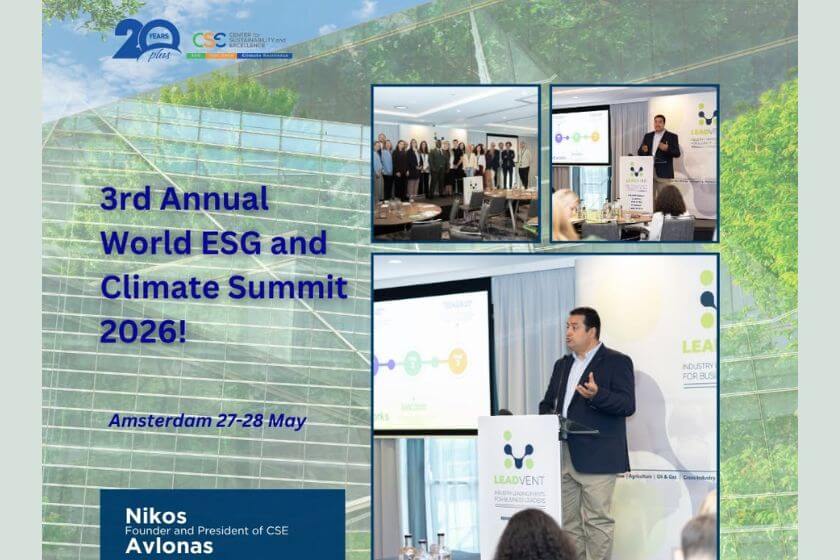
Amsterdam, May 2026 – The Center for Sustainability and Excellence (CSE) participated in the 3rd Annual World ESG & Climate Summit 2026, held in Amsterdam on May 27–28, 2026. CSE was represented by its President, Nikos Avlonas, who delivered a presentation titled “Product Circularity as a Strategic Advantage: Ratings and Assurance.” The summit brought together […]
CSE Sustainability Certification Recognized by Trellis

CSE Certification Recognized by Trellis Recognition matters when it reflects trust, practical value, and long-standing contribution. That is why CSE is honored that its Certified Sustainability Practitioner Program has been included in Trellis’ 2026 list of sustainability certifications. For CSE, this recognition is more than a mention. It confirms the growing importance of credible […]
Sustainability Training ROI: Budget or Advantage?

Sustainability training ROI has become a real business question for U.S. companies. Training budgets face pressure. Managers want proof. HR teams need a clear reason to approve participation. Yet sustainability now affects risk, reporting, supply chains, client expectations, reputation, and long-term planning. So, the question is not only, “Can we afford this training?” A better […]
Circularity Assessment for Retailers: From Goals to Product Proof

Why Sustainability Claims Need Stronger Proof Private-label products are no longer just lower-cost alternatives. For many retailers, they are strategic brands that influence margin, customer loyalty, product innovation, and sustainability positioning. This is where a circularity assessment can change the game. Customers now compare more than price. They look at product quality, packaging, durability, recycled […]