
 English
  Spanish
  French




Introduction to UK ESG Regulation
UK ESG regulation is entering a decisive phase in 2026. Sustainability reporting is no longer optional or purely reputational , it is becoming a regulated, standardized, and investor-critical requirement.
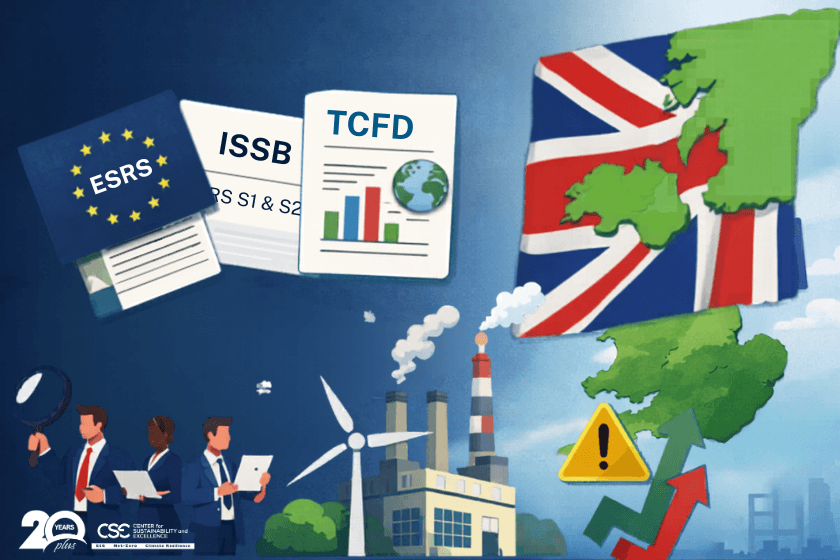
The UK government, Financial Conduct Authority (FCA), and Financial Reporting Council (FRC) are aligning national rules with global frameworks such as:
- ISSB (IFRS S1 & S2 standards)
- TCFD (Task Force on Climate-related Financial Disclosures)
- EU ESRS (European Sustainability Reporting Standards)
This convergence is designed to improve consistency, comparability, and reliability of ESG disclosures across markets.
For companies, this shift creates both risk and opportunity. Organizations that act early can strengthen investor confidence and competitive positioning, while laggards may face compliance gaps and reputational exposure.
Why Introduction to UK ESG Regulation Matters
UK ESG regulation is not just about compliance, it directly impacts strategy, capital access, and risk management.
1. Regulatory Pressure Is Increasing
The FCA’s Sustainability Disclosure Requirements (SDR) and investment labeling regime are expanding ESG obligations for listed companies and financial institutions.
2. Investors Demand Decision-Useful Data
Institutional investors increasingly rely on standardized ESG metrics aligned with ISSB and TCFD to assess long-term value and risk. According to the FCA and PRI (Principles for Responsible Investment), investors are shifting from ESG “labels” to verifiable performance data.
3. Reputation and Market Trust
Transparent ESG reporting strengthens relationships with:
- investors
- regulators
- customers
- supply chain partners
4. ESG Risks Are Now Financial Risks
Climate transition risks, governance failures, and supply chain disruptions are increasingly reflected in financial statements and valuations.
Key Changes in UK ESG Regulation (2026)
UK ESG regulation is moving from principles to enforceable, structured reporting requirements.
1. Alignment with ISSB Standards
The UK has committed to adopting ISSB standards (IFRS S1 and S2), forming the foundation of future disclosure requirements. This ensures global comparability and investor relevance.
2. Expansion of SDR (Sustainability Disclosure Requirements)
The FCA’s SDR framework introduces:
- ESG labeling rules for investment products
- Anti-greenwashing requirements
- Clear sustainability disclosures for asset managers and firms
3. Continued TCFD Integration
TCFD-aligned reporting is already mandatory for many large UK companies. By 2026, climate disclosures will be:
- more detailed
- more quantitative
- increasingly audited
(Source: UK Government & FCA climate disclosure rules)
4. Double Materiality Influence (via EU ESRS)
While the UK does not fully mandate ESRS, its influence is growing. Companies operating across the UK and EU must assess:
- Financial materiality (impact on company performance)
- Impact materiality (impact on society/environment)
5. Governance and Board Accountability
The FRC Corporate Governance Code emphasizes that boards must:
- oversee ESG risks
- integrate sustainability into strategy
- ensure data accuracy and internal controls
ESG reporting is now a board-level responsibility, not a siloed function.
Practical Steps for Companies
To prepare for UK ESG regulation in 2026, companies should take a structured, evidence-based approach.
Step 1: Conduct an ESG Gap Analysis
Benchmark current disclosures against:
- ISSB standards
- TCFD recommendations
- FCA SDR requirements
Step 2: Perform a Robust Materiality Assessment
Use stakeholder input and risk analysis to identify financially and societally material ESG issues.
Step 3: Strengthen Data Systems and Controls
Implement systems that ensure:
- audit-ready ESG data
- consistency across reporting periods
- integration with financial reporting
Step 4: Align with Recognized Frameworks
Adopt globally recognized standards such as:
- ISSB (primary for UK future alignment)
- TCFD (mandatory baseline)
- ESRS (if operating in EU markets)
Step 5: Upskill Leadership and Teams
ESG is no longer a niche function. Companies must train:
- finance teams
- risk managers
- board members
Common Mistakes to Avoid
Many organizations struggle due to avoidable issues:
- Treating ESG as a tick-box compliance exercise
- Failing to align ESG with financial strategy
- Using inconsistent or non-auditable data
- Ignoring regulatory overlap (UK + EU requirements)
- Delaying implementation until regulations are enforced
Real-World Impact of UK ESG Regulation
UK ESG regulation is already reshaping corporate behavior.
- FTSE-listed companies are expanding ESG reporting teams
- Financial institutions are embedding ESG into risk models and lending decisions
- High-impact sectors (energy, manufacturing, finance) face increased scrutiny and disclosure requirements
For example:
- Climate-related disclosures now influence cost of capital
- Supply chain transparency affects procurement decisions and partnerships
This marks a fundamental shift: ESG is no longer about narrative—it is about measurable performance and financial impact.
FAQs
What is UK ESG regulation in simple terms?
UK ESG regulation refers to rules requiring companies to disclose environmental, social, and governance data to improve transparency, accountability, and investor decision-making.
Is ESG reporting mandatory in the UK?
Yes, for many large companies. TCFD-aligned disclosures are already mandatory, and additional requirements under FCA SDR and ISSB adoption are expanding obligations.
Who regulates ESG in the UK?
Key regulators include:
- FCA (Financial Conduct Authority)
- FRC (Financial Reporting Council)
- UK Government / Department for Business & Trade
Author & Credibility Note
This article is based on publicly available guidance from:
- Financial Conduct Authority (FCA)
- Financial Reporting Council (FRC)
- IFRS Foundation (ISSB standards)
- UK Government ESG and climate disclosure policies
Start Your ESG Journey Today
Understanding UK ESG regulation is only the first step. Execution requires practical expertise, technical knowledge, and strategic alignment.
If you want to stay ahead, explore the:
Certified Sustainability (ESG) Practitioner Program – Advanced Edition (Europe 2026):
https://cse-net.org/trainings/europe-sustainability-esg-course-26-cohort1/
This program helps professionals:
- understand ISSB, TCFD, and ESG frameworks
- apply materiality assessments
- build audit-ready ESG strategies