
 English
  Spanish
  French


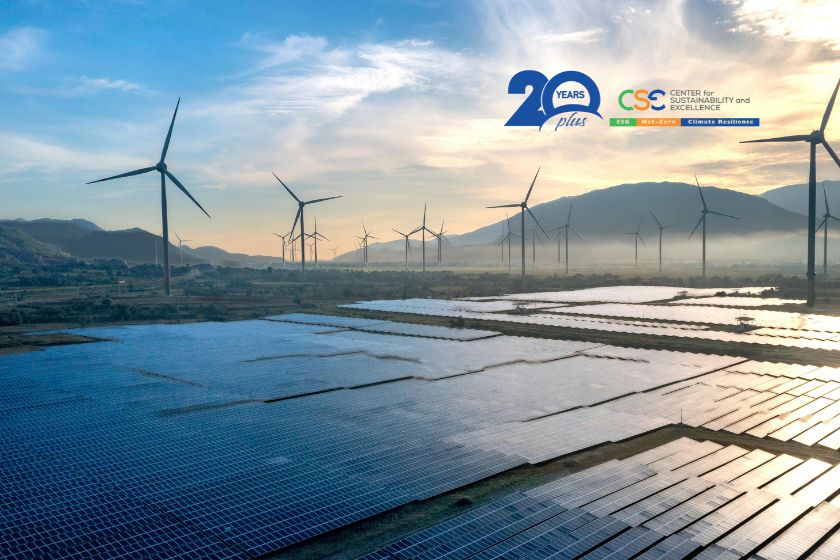


European energy coordination refers to the alignment of national energy policies, infrastructure planning, grid expansion and climate targets across EU Member States.
At first glance, this may sound like a technical policy matter. However, for ESG professionals, European energy coordination is now a financial and governance priority.
Under the CSRD and ESRS E1, companies must publish credible transition plans. These plans depend on assumptions about electricity prices, renewable energy availability, hydrogen infrastructure and cross-border interconnection capacity. When national energy strategies are fragmented or built on inconsistent modelling assumptions, businesses face uncertainty.
That uncertainty increases transition risk. It also weakens capital allocation decisions and reduces the credibility of disclosures.
As Europe moves towards climate neutrality by 2050, the ability of Member States to coordinate infrastructure and energy system planning will directly influence corporate Net Zero pathways. European energy coordination has therefore become a core ESG variable.
Benefits of European Energy Coordination for ESG Leaders
Strong European energy coordination creates measurable advantages for companies, investors and sustainability professionals.
Improved transition plan credibility
Aligned National Energy and Climate Plans provide more reliable assumptions for ESRS E1 disclosures and climate scenario modelling. Companies can design decarbonisation pathways that reflect infrastructure realities.
Lower regulatory uncertainty
When EU-level planning aligns with national implementation, policy divergence decreases. Organisations gain clearer long-term visibility for investment and procurement decisions.
Reduced stranded asset exposure
Uncoordinated electrification or gas phase-out strategies may lead to overbuilt LNG infrastructure, underutilised gas networks or industrial sites located in regions without sufficient renewable supply. Coordinated planning reduces these risks.
Greater price stability
Cross-border interconnection enables optimisation of renewable resources across regions. This reduces curtailment costs and wholesale electricity volatility, strengthening financial forecasting and risk management.
Stronger ESG ratings performance
Rating agencies increasingly assess transition credibility, governance robustness and climate scenario integration. Companies that understand systemic energy dynamics are better positioned to perform well under ESG scrutiny.
In short, European energy coordination strengthens both impact materiality and financial materiality.
Practical Steps to Integrate European Energy Coordination into ESG Strategy
Understanding the policy landscape is not enough. ESG leaders must embed European energy coordination into governance and reporting structures.
Embed EU-specific energy scenarios into climate strategy
Many organisations rely exclusively on global IEA scenarios. However, ESG strategy should also incorporate EU grid development plans, REPowerEU initiatives and interconnection expansion forecasts. This ensures electrification targets align with infrastructure timelines.
Strengthen double materiality assessments
Energy governance influences emissions pathways, but it also affects electricity price exposure and stranded asset risk. Double materiality assessments should explicitly evaluate both dimensions.
Elevate energy risk to board-level oversight
Energy system fragmentation affects site selection, mergers and acquisitions, supply chain resilience and capital allocation frameworks. Boards should integrate energy transition governance into ESG oversight structures.
Align reporting assumptions with ESRS and TCFD
Scenario analysis should stress test delayed grid reinforcement, slower hydrogen roll-out and higher-than-expected electricity price volatility. Transparent assumptions strengthen report defensibility and external assurance readiness.
Common Mistakes ESG Teams Make
- Assuming uniform electricity decarbonisation across EU countries
- Setting electrification targets without verifying regional grid capacity
- Ignoring interconnection constraints in supply chain risk modelling
- Treating energy policy alignment as static rather than evolving
These mistakes undermine transition credibility and may erode investor confidence.
Real-World Application: Energy Governance and Corporate Reporting
Recent EU developments demonstrate why European energy coordination matters now. The revision of National Energy and Climate Plans, accelerated REPowerEU implementation and expanded offshore wind cooperation in the North Sea highlight a growing emphasis on integration.
However, modelling transparency and infrastructure synchronisation remain uneven.
Companies preparing CSRD-aligned sustainability reports must reflect these dynamics in:
- Transition plans under ESRS E1
- Scope 2 and Scope 3 emissions modelling
- Capital expenditure alignment with the EU Taxonomy
- Climate-related financial risk disclosures under TCFD and ISSB
Energy governance literacy improves disclosure quality. It also strengthens strategic resilience.
As sustainable finance regulation deepens, investors expect companies to demonstrate that decarbonisation commitments rest on realistic infrastructure assumptions. European energy coordination therefore becomes a competitive differentiator.
FAQs
What is European energy coordination in simple terms?
European energy coordination is the alignment of energy policies, infrastructure planning and climate targets across EU Member States to create a resilient, cost-efficient and integrated energy system that supports decarbonisation and market stability.
How long does it take to develop expertise in European energy coordination and ESG strategy?
Foundational ESG knowledge can be built within a few weeks. However, mastering CSRD, ESRS, ESG ratings methodologies and climate scenario analysis requires structured training, case studies and applied assignments over several months.
Is knowledge of European energy coordination valuable for ESG career growth?
Yes. Organisations increasingly need professionals who can interpret EU energy policy, integrate systemic infrastructure risk into strategy and produce defensible sustainability disclosures. This expertise strengthens leadership credibility and supports career progression.
Lead the Transition to Sustainable Business
European energy coordination illustrates how macro-level policy directly shapes ESG reporting, financial materiality and capital allocation decisions.
If you want to deepen your expertise in CSRD, ESRS standards, ESG ratings, Scope 3 accounting and Net Zero strategy, the Certified Sustainability ESG Training Programme Advanced Edition 2026 provides structured, practical guidance.
The programme equips professionals to interpret regulation, conduct robust materiality assessments and align sustainability strategy with evolving European policy frameworks. Register for the upcoming session and position yourself at the forefront of strategic ESG leadership or contact marketing@cse-net.org for in-house training opportunities.