 English
  Spanish
  French


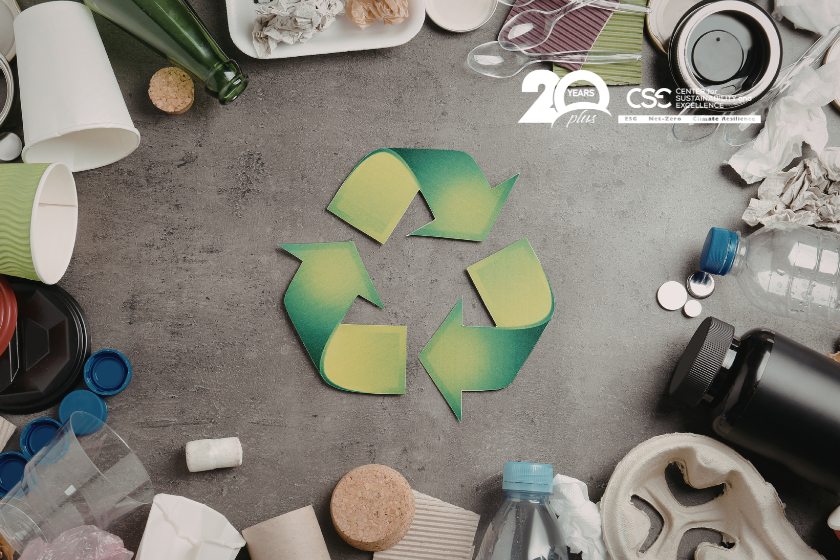


Circular economy strategies are no longer driven by sustainability goals alone. Across the United States, companies are adopting circular models because they reduce costs, improve material resilience, and strengthen operational efficiency.
Circular economy practices are expanding rapidly, particularly in waste-intensive sectors such as retail, logistics, and manufacturing. What has changed is the motivation. Circularity is now framed as a business optimization strategy, not an environmental add-on.
For sustainability professionals, this shift marks a critical transition. Circular economy knowledge is becoming a core operational and financial competency.
Why Circular Economy Has Become a Cost-Driven Business Strategy
Rising raw material prices, waste disposal costs, and supply chain disruptions have exposed the weaknesses of linear “take-make-dispose” models. U.S. companies are reassessing material use because inefficiency now directly affects margins.
Circular strategies allow organizations to:
-
Reduce raw material input and procurement costs
-
Lower landfill and waste management expenses
-
Improve asset utilization and product lifecycles
-
Stabilize supply chains through material reuse
In many cases, circular initiatives begin as cost-control measures and later evolve into broader ESG strategies.
Waste-Intensive Sectors Lead Circular Adoption
Circular economy adoption is most advanced in sectors where material waste and inefficiency are highly visible on the balance sheet.
Retail and consumer goods companies are redesigning packaging, increasing recycled content, and introducing take-back programs to reduce material costs and exposure to waste regulation.
Logistics and distribution firms are investing in reusable pallets, containers, and reverse logistics systems. These initiatives reduce packaging spend and disposal fees while improving operational consistency.
Manufacturing organizations are implementing closed-loop systems, remanufacturing, and byproduct reuse. In some cases, internal scrap is reintroduced into production, lowering raw material demand and waste costs simultaneously.
These practices are increasingly supported by lifecycle assessment (LCA) and material flow analysis to identify the highest-impact opportunities.
Circular Economy as a Tool for Supply Chain Resilience
Beyond cost efficiency, circular economy strategies are now closely linked to material security and supply chain resilience.
Companies heavily dependent on virgin raw materials face:
-
Price volatility
-
Supply shortages
-
Geopolitical sourcing risks
Circular approaches such as increased recycled content, material substitution, and local remanufacturing reduce dependence on fragile supply chains. Organizations using secondary materials are often better positioned during periods of disruption.
For ESG teams, circularity is increasingly discussed alongside procurement risk, supplier diversification, and operational continuity.
From Sustainability Concept to Operational Practice
One reason circular economy adoption has accelerated is its translation into measurable operational actions.
Companies now integrate circular principles into:
-
Product and packaging design
-
Procurement and supplier criteria
-
Waste and byproduct management
-
Capital investment decisions
This shift requires collaboration across sustainability, operations, engineering, procurement, and finance. Circular economy initiatives succeed when they are aligned with clear KPIs, such as material intensity, waste reduction rates, and cost savings per unit produced.
Real-World Application: What Companies Are Experiencing
In practice, many U.S. companies begin circular initiatives to address rising operational costs rather than ESG targets.
For example:
-
Manufacturing firms implementing internal material reuse programs report reductions in raw material purchasing and waste disposal costs, often in the range of 5–15 percent for specific product lines.
-
Retail and logistics companies adopting reusable packaging systems report lower packaging procurement costs over time, despite higher upfront investment.
-
Facilities-focused circular projects, such as waste segregation and byproduct recovery, often deliver quick payback periods when landfill fees are high.
However, practitioners consistently note that not all circular initiatives deliver immediate returns. Success depends on proper scoping, data availability, and internal alignment.
The Evolving Role of ESG Professionals
As circular strategies become business-driven, ESG professionals are expected to move beyond reporting and advocacy. Their role increasingly involves identifying opportunities, building business cases, and supporting implementation.
Key competencies now include:
-
Understanding circular business models
-
Applying lifecycle and material flow thinking
-
Evaluating cost, risk, and efficiency impacts
-
Communicating value to operational and financial teams
Professionals who can translate circular economy concepts into operational and financial language are becoming particularly valuable.
Building Circular Economy Capability Through ESG Training
Despite growing interest, many organizations struggle to operationalize circular economy concepts. Circularity is often discussed, but not embedded into decision-making.
The USA Certified Sustainability Practitioner Program, Advanced Edition 2026 by CSE addresses this gap by linking circular economy principles to practical business application. The program explores how circular strategies contribute to cost efficiency, resilience, and long-term value creation in U.S. market conditions.
Participants develop understanding of:
-
Circular economy models and KPIs
-
Waste reduction and material efficiency strategies
-
Integration of circularity into ESG and supply chain strategy
-
Measurement and communication of circular outcomes
The emphasis is on realistic implementation, not idealized theory.
A Balanced View of Circular Economy Implementation
While circular economy strategies offer clear benefits, they also involve trade-offs. Some initiatives require upfront investment, supplier engagement, or process redesign. Not all materials or products are suitable for circular solutions.
Organizations that succeed typically:
-
Start with high-impact, low-complexity opportunities
-
Pilot initiatives before scaling
-
Use data to track cost and performance outcomes
Training helps ESG professionals assess where circular strategies make business sense and where expectations should be managed.
Circular Economy as a Competitive Advantage
As pressure grows to improve efficiency and resilience, circular economy strategies are becoming a competitive differentiator. Companies that reduce waste, optimize material use, and strengthen supply chain resilience are better positioned to manage cost volatility and regulatory pressure.
For ESG professionals, circular economy expertise supports both organizational performance and long-term career growth.
Learn how to apply circular economy strategies in a business-driven ESG context through the Certified Sustainability Practitioner Program and strengthen your impact as sustainability expectations continue to evolve.