 English
  Spanish
  French


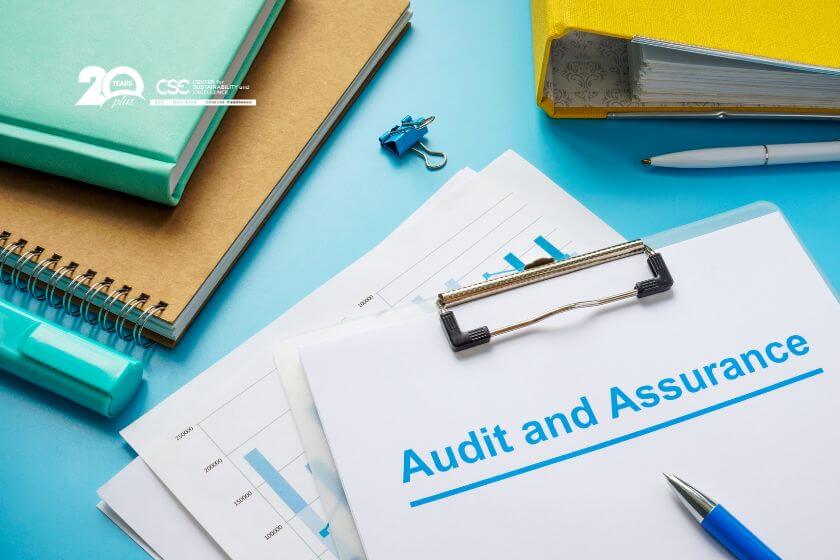


In 2026, assurance and audit-ready sustainability reporting expand rapidly across the United States as companies respond to growing investor scrutiny and rising expectations for credible data. Even without a single, unified federal mandate, organizations increasingly treat sustainability disclosures with the same rigor as financial reporting. As highlighted in CSE’s Sustainability and ESG Trends in the U.S. for 2026, this shift reflects a broader demand for transparency, accountability, and trust in sustainability information.
For sustainability and ESG professionals, this trend marks a decisive turning point. Reporting now requires structure, controls, and verification. Narrative disclosures alone no longer meet stakeholder expectations.
Why assurance-ready reporting matters in 2026
Investors, lenders, and business partners increasingly rely on sustainability data to inform risk assessments and capital allocation decisions. As a result, companies must ensure that reported information withstands scrutiny. Assurance and audit-ready sustainability reporting strengthen credibility, reduce greenwashing risks, and support informed decision-making.
In practical terms, assurance-ready reporting requires consistent data collection, clear documentation, and alignment with recognized standards. Organizations that fail to prepare for assurance expose themselves to reputational risk and declining investor confidence. The CSE trends analysis confirms that many U.S. companies already move in this direction, even where regulation remains uncertain.
The U.S. reporting landscape continues to evolve
Unlike Europe, the U.S. does not yet enforce a comprehensive sustainability reporting mandate. However, this regulatory gap has not slowed progress. Instead, companies respond to investor pressure, global market exposure, and internal governance needs.
Many U.S. firms voluntarily align disclosures with established frameworks such as GRI, SASB, TCFD, and ISSB. They also pursue third-party verification to enhance data credibility. These steps support assurance and audit-ready sustainability reporting, even in the absence of uniform federal requirements.
From narrative reporting to controlled systems
Historically, sustainability reporting often focused on storytelling and high-level commitments. Today, companies adopt a more disciplined approach. They build systems that mirror financial reporting processes and support assurance requirements.
Effective assurance and audit-ready sustainability reporting relies on:
-
Clear data ownership and governance structures
-
Documented methodologies and calculation logic
-
Traceable data sources and audit trails
-
Internal controls and review processes
-
External verification or assurance readiness
These elements help organizations produce reliable, comparable, and defensible sustainability disclosures that investors can trust.
Investor expectations drive this expansion
Investor demand remains one of the strongest drivers behind this trend. Asset managers and institutional investors increasingly integrate sustainability data into valuation models, risk analysis, and stewardship activities. They expect companies to provide consistent and verifiable information, particularly on climate-related risks and emissions performance.
As assurance and audit-ready sustainability reporting expand, companies that invest in robust reporting systems gain a competitive advantage. They demonstrate preparedness, reduce uncertainty, and strengthen long-term relationships with capital providers.
The growing skills gap for professionals
This reporting evolution creates a clear skills gap. Organizations need professionals who understand reporting frameworks, materiality principles, internal controls, and assurance processes. Sustainability teams now collaborate closely with finance, risk, and internal audit functions.
As assurance and audit-ready sustainability reporting become standard practice, professionals who combine sustainability expertise with reporting and governance knowledge will stand out. Employers increasingly prioritize applied skills over general awareness.
Why advanced training is essential
Keeping pace with this trend requires more than on-the-job learning. Professionals must understand how sustainability data flows through organizations, how assurance providers assess credibility, and how reporting frameworks interact.
The Certified Sustainability Practitioner Program – Advanced Edition (USA) equips professionals with the knowledge and practical tools needed to succeed in this environment. The program covers sustainability reporting standards, materiality assessment, data governance, and preparation for external assurance. It focuses on real-world application, enabling participants to support audit-ready disclosures with confidence.
For professionals working in sustainability, ESG reporting, consulting, or risk management, this training provides a strong foundation to meet evolving market expectations.
Credibility defines leadership in 2026
In 2026, sustainability reporting increasingly resembles financial reporting. Organizations expect consistency, accountability, and verification. Assurance and audit-ready sustainability reporting now define best practice in the U.S. market.
As this trend accelerates, professionals who understand how to build credible reporting systems will play a central role in protecting trust and supporting strategic decision-making. Investing in advanced skills today strengthens both organizational resilience and long-term career prospects.
The USA Certified Sustainability Practitioner Program – Advanced Edition equips professionals with the expertise needed to design, manage, and support assurance and audit-ready sustainability reporting in line with evolving U.S. and global expectations.